Social distrust of automatons
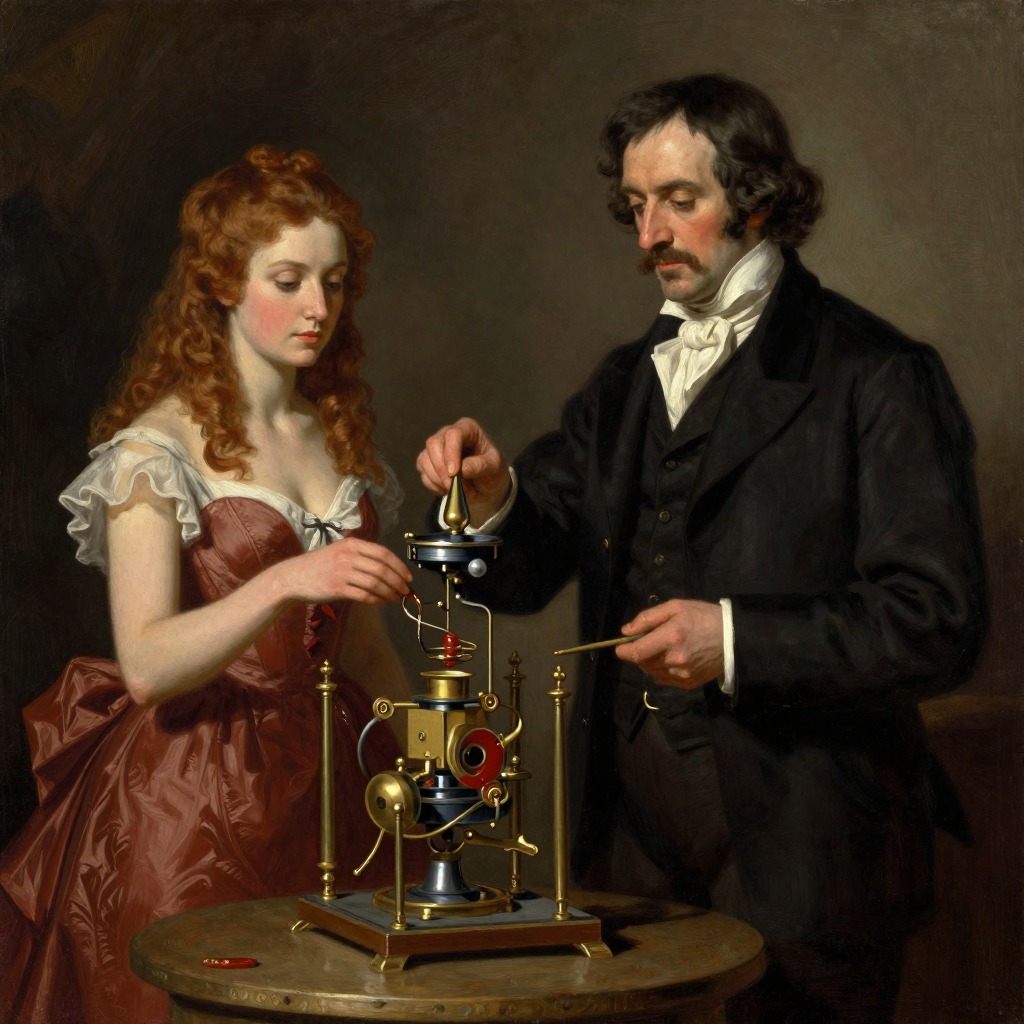
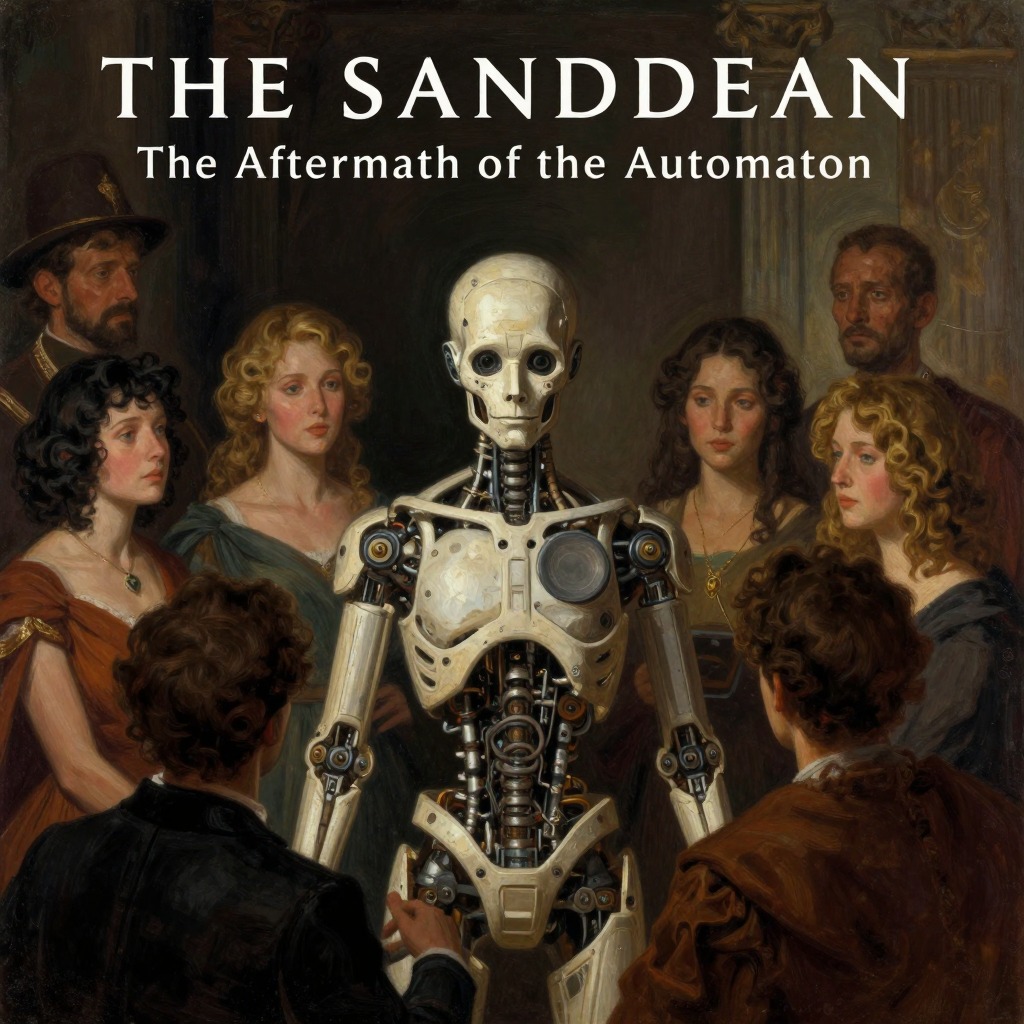
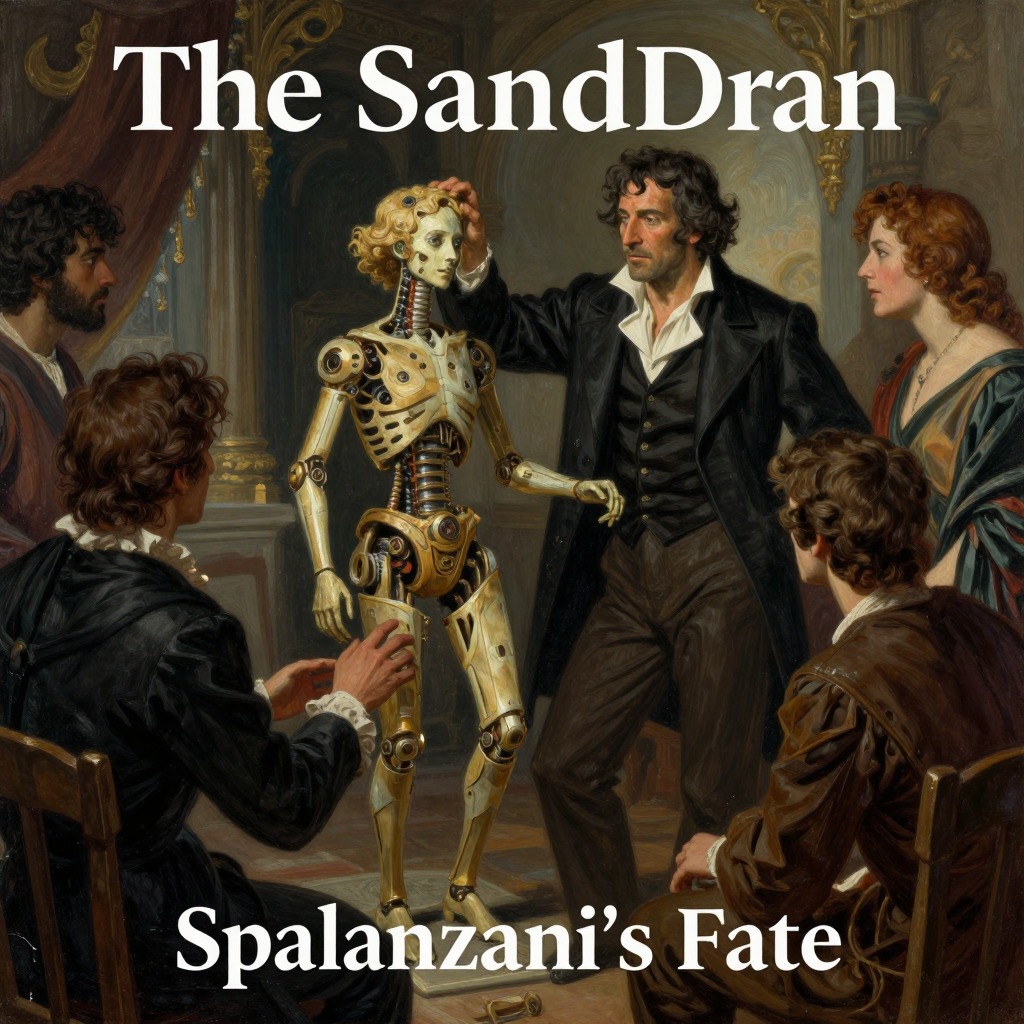
The revelation that Olympia, the beautiful and seemingly perfect daughter of Professor Spalanzani, was in fact a lifeless automaton sent a shockwave through the society of the university town. This event, which culminated in a violent struggle between Spalanzani and the optician Coppola over the doll's dismembered parts, did not merely expose a private deception. It fundamentally destabilized the social order, breeding a deep and pervasive distrust of human figures that altered courtship, conversation, and the very criteria by which people judged one another's reality.
The Scandal and Its Immediate Aftermath
The public unmasking of Olympia as a wooden doll, with her wax face and black hollows where eyes should be, caused an uproar that forced Spalanzani to flee the university to escape a criminal investigation. The scandal was widely regarded as an 'altogether fraudulent swindle' to pass off a mechanical construct as a living person in proper society. Jurists debated the legal nuances, calling it a 'refined, and, therefore, all the harder to punish, swindle' that had successfully deceived nearly everyone, except for a few sharp-eyed students who now, with hindsight, claimed to have noticed suspicious details. One elegant invitee, for instance, testified that Olympia had sneezed more often than she yawned, suggesting the hidden rewind mechanism of the automaton creaked audibly. A professor of poetry and rhetoric, taking a pinch of snuff, dismissed the whole affair as an allegory, a 'long-drawn-out metaphor,' but this intellectual consolation did little to calm the public's unease.
The Erosion of Trust and New Social Rituals
The story of the automaton took root in the collective psyche, and a 'dreadful distrust of human figures seeped into their souls.' This paranoia manifested in concrete, often absurd, social rituals. Lovers, in order to be completely convinced they were not in love with a wooden doll, began to demand that their beloveds demonstrate their humanity through specific, unpredictable behaviors. They required their partners to sing off-key, dance out of step, embroider or knit while being read to, and play with a dog. Most importantly, they insisted that their beloved not only listen but also occasionally say something in a way that proved their words 'necessarily derive from actual thought and feeling.' The consequence was a bifurcation of relationships: some couples found their bonds strengthened and made more attractive by this testing, while others quietly drifted apart. The common excuse for any social awkwardness became, 'One can hardly be held accountable for this.' In a telling shift of social etiquette, yawning became fashionable at tea parties, while sneezing was carefully avoided, as it had become a suspicious sign of mechanical hidden mechanisms.
Thematic Significance: The Crisis of Perception
The social distrust of automatons represents a profound crisis of perception and a collapse of the boundary between the organic and the mechanical. The scandal forced society to confront the terrifying possibility that the human form could be perfectly mimicked without a soul, and that the signs of life—speech, movement, song—could be produced by clockwork. This anxiety echoes Nathaniel's own earlier, more personal crisis, where he could not distinguish between the living Clara and the mechanical Olympia. The public's reaction, with its desperate need for proof of authentic humanity, mirrors Nathaniel's own tragic inability to see the difference. The story thus suggests that the threat of the automaton is not merely a technological one, but a philosophical one: it undermines the very foundations of trust, love, and social interaction, revealing how fragile the consensus on what constitutes a 'real' person can be.